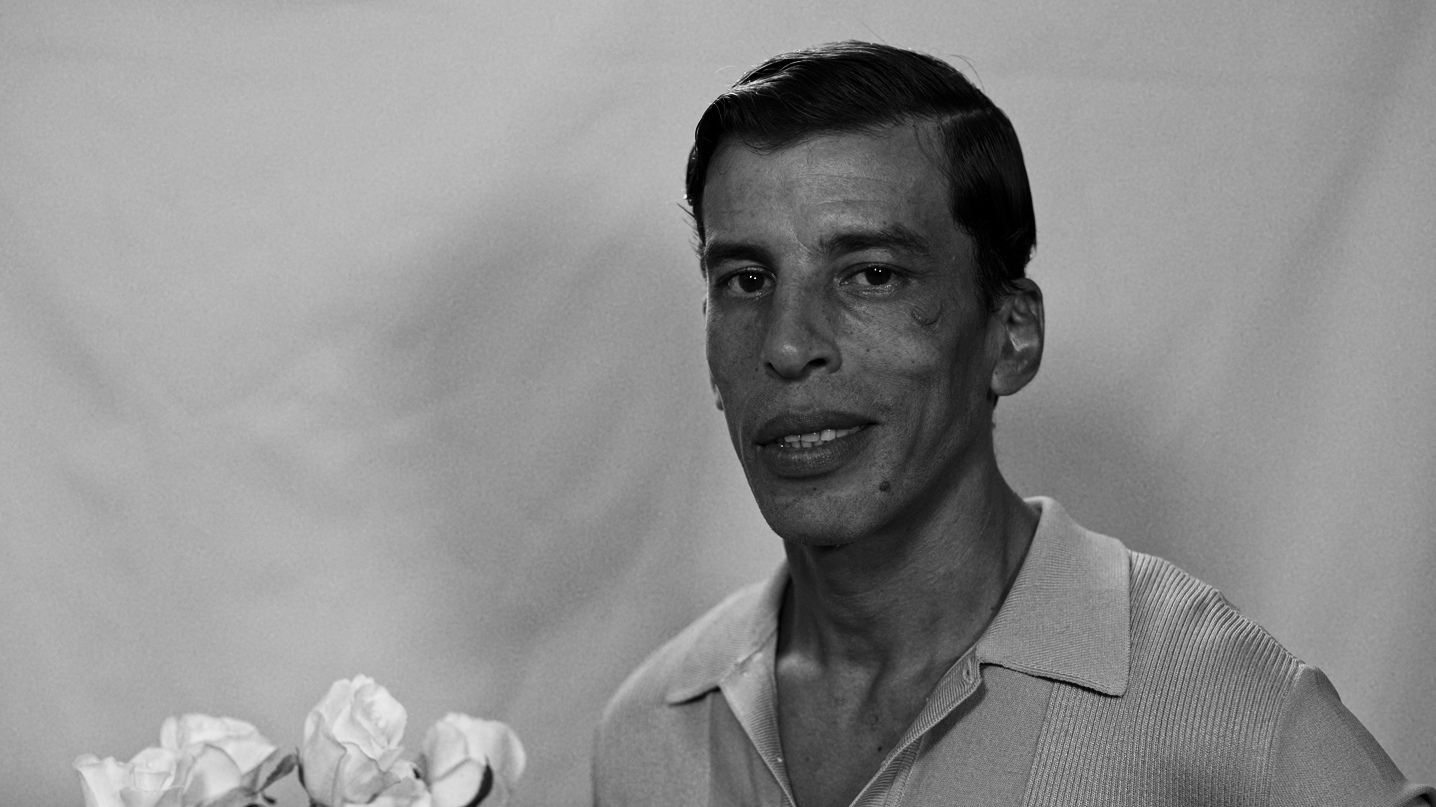
Albert Camus’ novel The Stranger (L’étranger) recently got a cinema adaptation, under the same title, by French director François Ozon, which is part of the lineup of the 55th edition of the International Film Festival Rotterdam (IFFR). But another film related to the Camus classic world premiered in the Big Screen Competition of the festival on Saturday night: The Arab, the fiction feature debut by documentary maker Malek Bensmaïl (Checks and Balances, Alienations, The Battle of Algiers, a Film Within History).
The movie, directed by the filmmaker and written by him and Jacques Fieschi, reframes an unnamed figure from the book, a murdered man who is simply referred to as The Arab throughout the novel. In the film, his name is Moussa, and his story is told through the testimony of his aging brother Haroun to a journalist, making the film an exploration of memory, identity, and colonialism, given that Algeria was a French colony for 132 years until 1962.
The Arab also references the Algerian Civil War, known in the country as the Black Decade or The Dirty War, which was fought between the Algerian government and Islamist rebel groups from 1992 until 2002.
The Arab is loosely based on the 2013 novel The Meursault Investigation by Algerian writer Kamel Daoud. Meursault is the narrator of Camus’ The Stranger. The film shows Haroun recounting his version of what happened and how it reshaped his own life and that of the brothers’ mother. It is a murder mystery without clear or easy answers.
Palestinian actress Hiam Abbass (Palestine 36, Munich), who is widely know for portraying Marcia Roy in the HBO hit drama Succession, plays the mother in The Arab, with the film also starring Nabil Asli, Ahmed Benaissa, Dali Benssalah, Thierry Raphaël, Brahim Derris, and Amina Ben Ismail. Production company Hikayet Films is handling sales.
During a Q&A following the world premiere of The Arab, Bensmaïl was asked about moving from doc to fiction film. “I make no difference between documentaries and fiction,” he shared via an interpreter. “But what was especially interesting in this case was to pull out features that the actors already had and to show their own political, and maybe also psychological, features. I did that in fiction the same way that I would also do it with a documentary.”
The director also explained that he put more focus on the mother-son relationship, with an Oedipal quality to it. “The mother actually becomes enthralled by this craziness of revenge,” said Bensmaïl. “And what is very interesting is that there’s a parallel with the history of Algeria.”
Source link