Spanish film company ISII Group believes that artistic and financial ambition can go hand-in-hand to create cinema that can travel.
Led by CEO Silvia Carvalho, the Madrid-headquartered group encompasses four production firms, namely Inefable, focused on fiction, Isora Films for documentaries, Sinapsis Studios for animation projects, and SIA Servicios Audiovisuales, its production services arm. It also includes international sales and distribution firm Deep Com Roots, KBCF Consulting, which focuses on financial and regulatory structuring, and Divergente, a streaming platform for content that is less than an hour long.
Founded in 2024, ISII will, via Deep Com Roots, participate in its first market, Berlin‘s European Film Market (EFM), which runs Feb. 12-18, bringing three films.
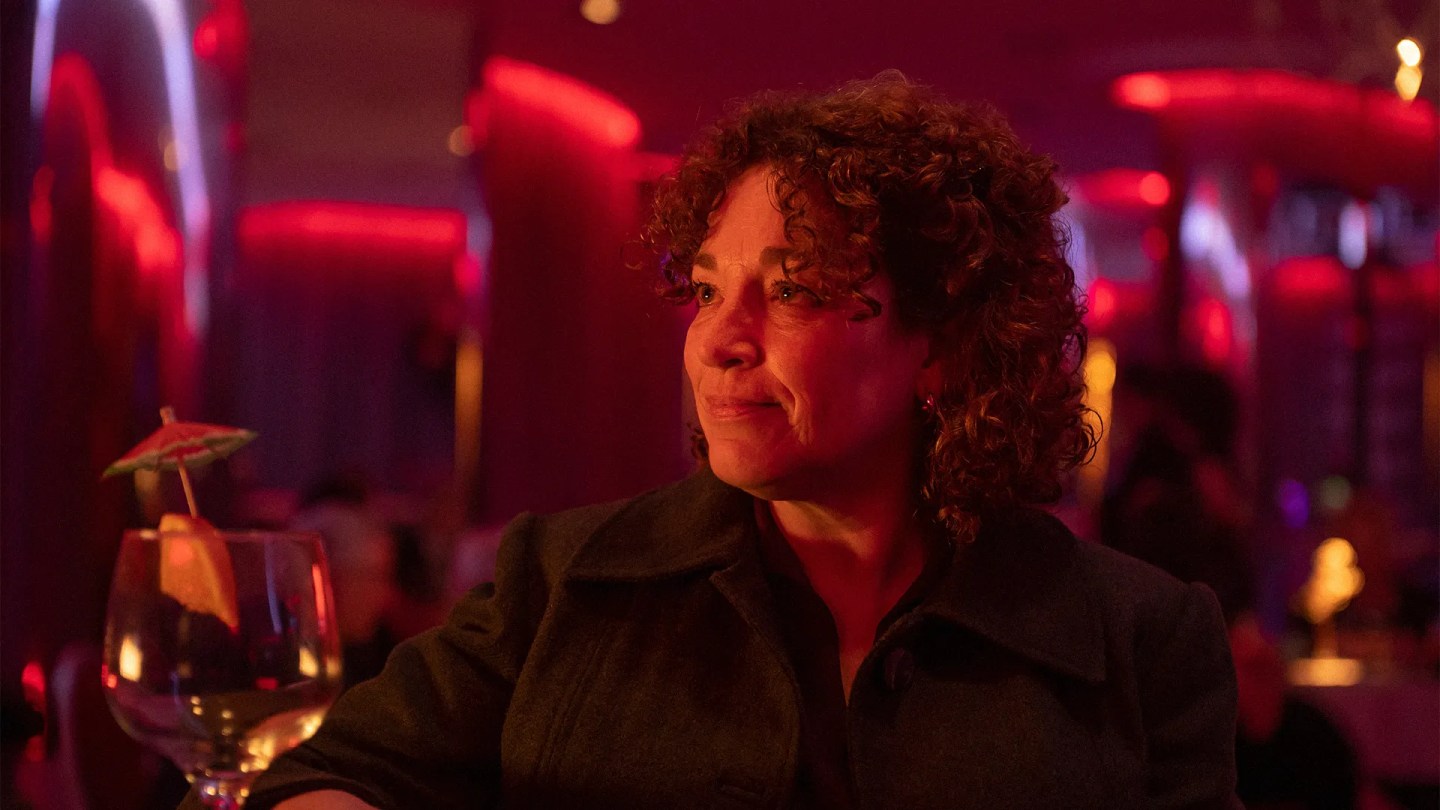
Auri, directed by Violeta Salama and starring Cristina Marcos (All Men Are the Same), Karra Elejalde, Marco Cáceres, and Numa Paredes, is an intergenerational feel-good movie described as exploring “with humor and tenderness the longings of a woman who has just turned 65.” Arima León’s debut feature Love on a Tightrope looks at the love between tightrope walker Pinito del Oro and poet Natalia Sosa, played by Adriana Ugarte (Julieta) and Tania Santana, “that became impossible in a turbulent era when love was censored,” according to a synopsis. Finally, the drama Summer Days, directed by Chema de la Peña and starring Maggie Civantos (Cable Girls), Pau Simon, Roberto Álamo, and Berta Galo, follows Juan, whose father brings his new, and much younger, girlfriend to the family home, leading to growing tension between the men and “a passion neither of them can control” between the son and the girlfriend.
ISII has previously also announced the action-adventure Trinidad, directed by Laura Alvea and José Ortuño, about a young Spanish woman, played by Gabriela Andrada, who moves to the American Wild West with her mother, portrayed by Paz Vega, and sister (Sofía Allepuz), to escape legal issues, finding a new life as a gunslinger. That allows her to support her family, but also creates enemies, including the widow Bronson, played by Karla Sofía Gascón.
Ahead of ISII’s market debut in Berlin, Carvalho talked to THR about the company’s business approach and focus on forging new ways.
What is ISII Group’s strategy, given that the company is made up of seven businesses?
ISII Group is built as a vertically integrated audiovisual group, but with a very deliberate principle: each business unit is a standalone, market-facing company. These are not internal departments designed only to serve our own slate. Each unit operates with international-grade standards, measurable quality control, and the ability to work for third parties at scale.
Our group strategy is industrial by nature: we aim to reduce chronic fragmentation in the European film ecosystem and turn film into a … repeatable, investment-ready sector. Vertical integration allows us to align development, packaging, production, post, sales, distribution, and release strategy under one operational standard – meaning fewer “heroics,” less improvisation, and more system. When the system is right, it protects margin, increases speed, and allows ambition.
What are the key advantages of covering the entire value chain? Do you see competitors in Spain covering that full range?
The advantage and the necessity are inseparable: industrialization and return. Historically, film has been structured as a collection of silos, each optimizing for its own short-term logic. Our model is different: the value of the full chain is that every function is aligned around one objective – real commercial performance, especially the true return on private capital.
That matters because the conventional European financing structure – heavily driven by pre-sales and subsidies – has shaped industry behavior. In many cases, distribution becomes a mechanism to “close the financing puzzle,” rather than a strategic engine designed to maximize results. We do not treat distribution as a final step. We treat it as a driver from day one: development and packaging must already anticipate audience, positioning, windows, and release execution if you want consistent profitability – not just financeability.
Spain has strong companies in individual segments – production, distribution, services – but the combination of full-chain integration, governance, and a capital-return mindset is still rare.

ISII Group CEO Silvia Carvalho
Courtesy of Esteban Palazuelos
What is your international vision and strategy?
Our vision is to make CINEMA – capital letters! That means building projects beyond the constraints of a single platform’s commissioning logic or a financing model designed primarily to fit a subsidy category. When a film is designed to “fit a box,” ambition is often the first casualty.
We want the opposite: to use the globalization that already exists – markets, windows, audiences, buyers – to monetize ambitious films. If you build for international reach, you can take bigger creative swings: higher visual ambition, more cinematic scale, and a stronger event mentality. That is the foundation of our international strategy: a slate designed to travel, executed with industrial discipline and consistent delivery standards.
Congratulations on your first EFM in Berlin. Why are you ready now, and where else will we see you this year?
It’s a logical milestone. We’ve spent more than eight months building the real deployment of our distribution and sales structure: processes, materials pipeline, positioning, and early work on the titles that are now entering distribution and will be launched in 2026.
As a sales and distribution company, we’re not only taking our own slate to the world – we are also opening a dedicated international acquisitions lane. This is part of becoming a true market operator: you build a catalog, relationships, and continuity, not just title-by-title visibility.
In terms of presence, we will focus on the most important global markets: starting with Berlin, followed by Cannes, Toronto, Venice, and San Sebastián. In this first year, we’re not prioritizing a major deployment in Latin American or Asian markets as primary strategic hubs, although those territories will of course be addressed through sales based on each title’s needs.
ISII shot four feature films in 2025. How many are you shooting this year? What’s the target per year? And is there a film that you would call your most ambitious yet?
In 2026, we have seven feature films in the pipeline, and we will announce titles soon. Our goal is not volume for headlines. It’s a sustainable annual rhythm with controlled risk, consistent quality, and a structure that does not depend on one single outlier success.
In terms of ambition already produced, Trinidad is clearly the most ambitious so far – because of creative risk, financing architecture, execution complexity, and especially the 2026 release strategy. It’s designed as an event, with a long-view commercial plan.
on the set of ‘Love on a Tightrope,’ courtesy of Julia Quintana/ISII Group
Courtesy of Deep Com Roots/ISII Group
What do you look for in the films you make? How important are star power, genre, language, and other factors?
Creativity is naturally hard to reduce to a formula, but our criteria are both artistic and highly concrete.
We pursue two lanes: First, projects rooted in local identity, but with such a strong voice that they generate global interest. Second, truly global originals – harder to build because they often start from zero – with a powerful core idea, and a cinematic language that prioritizes what makes films great: visual storytelling over dialogue, a strong authorial image, and scenes that stay in your memory.
Language is strategic. In 2025, we shot only in Spanish. In 2026, we are also producing English-language features. Language affects consumption, market share, and downstream positioning. And we have a clear North Star: we want to bring audiences back to the theatrical experience. That goal influences scale, packaging, casting, language choices, and release design.
Star power matters – because it impacts financing, distribution, and visibility – but it can’t replace the essence of the film.
With Spanish content booming globally, is now the moment for Spain to play a bigger role internationally?
Yes, and Spain’s recent growth has been helped by platform demand, which has strengthened the workforce and professional ecosystem. But the next leap isn’t just volume. It’s financing and scale.
Europe still needs more capacity to consistently mount larger, more internationally competitive productions – projects that can travel as cinematic events and support private investment structures. We strongly believe in Spain as a production country, and we’re committed to growing that ambition: not only producing more, but producing bigger and better, with the governance and financing sophistication required to compete globally.
Which films are you bringing to EFM in Berlin, and what do they have in common?
We’re presenting Auri, Love on a Tightrope, and Summer Days.
They matter for two reasons. First, they represent the kind of cinema we want to be known for: distinctive identity, audience-aware packaging, and real commercial strategy from the start. Second, they mark a clear step in our international evolution – these are among the first titles in our slate developed and positioned with a more direct international language and market strategy, designed to travel beyond traditional local frames.
What they share is not a genre label – it’s an approach: films built to travel, executed under strict delivery standards, and engineered for market performance without sacrificing artistic identity.
What is your financing approach, and what role do incentives play in it?
We use incentives as any serious production company does. The difference is that, in our structure, the largest share comes from our own investment and private Spanish capital.
We also leverage the Canary Islands incentive in a coherent group-wide way: we don’t just have production entities in the region – we also operate the group’s service arm and a fully developed post-production hub, where we’ve invested significant capital to strengthen execution, quality control, and scalability.
For us, incentives are not “the business model.” They are one tool inside a broader architecture designed for projects to be auditable, governed, and profitable.
Pau Simon and Maggie Civantos star in ‘Summer Days,’ courtesy of Fernando Torres
Courtesy of Deep Com Roots/ISII Group
You just mentioned the Canary Islands. Why is that location important?
Beyond incentives, the Canary Islands are strategically valuable for very concrete reasons: climate, the ability to shoot year-round, strong operational conditions, and – crucially – a highly skilled local professional base.
That said, we’re not dogmatic. We also shoot in mainland Spain and always choose what is most beneficial for each project’s creative and financial logic. The point is efficiency and execution quality, not geography as a narrative.
Would ISII consider acquisitions or major corporate deals?
Yes – selectively and with discipline. We are open to acquisitions, strategic partnerships, and integrations, but only when they strengthen the fundamentals of the model: execution capacity, governance, scalability, and international commercial reach.
We evaluate deals against a clear logic: Does it expand our ability to deliver at an international standard (production, post, technical pipeline, quality control, security, workflows)? Does it strengthen our market position (distribution, sales, access to buyers, catalog strategy, theatrical execution capability)? Does it improve repeatability and margin protection – meaning a deal that reduces friction, adds capacity, or increases control over the value chain? Does it help us serve third parties better, not only ourselves –because our units are designed to be market operators?
We are not interested in “growth for the press release.” We’re interested in growth that compounds: better infrastructure, stronger governance, more consistent commercial outcomes. If a deal doesn’t make the group more scalable and more investable, we don’t do it.
Gabriela Andrada, Paz Vega and Karla Sofía Gascón star in ‘Trinidad’
What else is important for an international audience to understand about ISII Group?
ISII Group isn’t simply a company that produces films. ISII is a working model – a way of structuring cinema so that artistic ambition and industrial discipline reinforce each other.
Internationally, that matters because we’re designed to collaborate. We have the capacity to develop and produce our own slate, but also to work with international partners across the chain: In the Canary Islands, through our service operation and post-production hub, enabling international productions to execute at a high standard with strong operational conditions. Through our distribution and international sales operation, designed to position projects globally – both our own and, increasingly, third-party titles aligned with our strategy.
What we want to represent in the international market is very concrete: cinema with ambition, delivered with international-standard execution, inside a structure that can generate real commercial performance and credible investor confidence. In a sector that still relies too often on improvisation, we believe the next competitive advantage is structure – because structure is what turns talent into sustainable industry.
Source link