The world is about to see a lot more of Sandra Hüller.
The acclaimed German actress, Oscar-nominated for Anatomy of a Fall, whose long line of European arthouse triumphs includes Jonathan Glazer’s The Zone of Interest (2023), Maren Ade’s Toni Erdmann (2016), and Hans-Christian Schmid’s Requiem (2006), is about to have a very big year, starring alongside Tom Cruise in Alejandro G. Iñárritu’s hotly anticipated dramedy Digger, and together with Ryan Gosling in the sci-fi feature Project Hail Mary from Phil Lord and Christopher Miller.
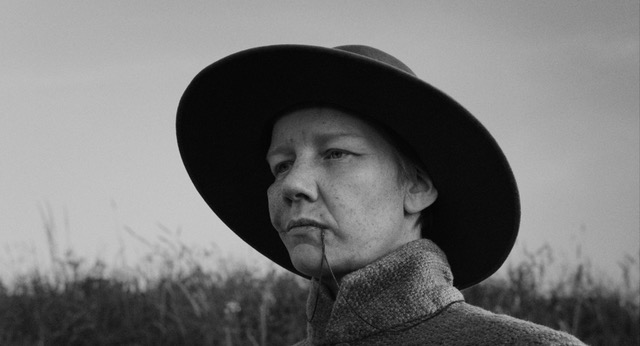
But before you think Hüller has gone Hollywood, she is returning to the terrain that made her reputation. Markus Schleinzer’s stark black-and-white period drama Rose finds Hüller once again pushing herself to extremes.
The film is set in the aftermath of the brutal Thirty Years’ War (1618-1648), in which the death toll in some regions of Germany topped 50 percent of the population. Hüller plays a scarred, taciturn soldier, a woman who has long lived disguised as a man. She arrives at a small village to claim a long-abandoned farm, presenting herself as the long-lost son of the owner. With time, the suspicious, deeply religious villagers begin to slowly accept this hard-working, God-fearing man. But Rose lives under constant fear of her lie being exposed, with potentially deadly consequences.
Inspired by real historical cases, Rose is the third feature from Austrian director Markus Schleinzer following Cannes competition title Michael (2011) and Angelo (2018), which premiered in Toronto.
Hüller spoke to The Hollywood Reporter ahead of the film’s world premiere in competition in Berlin about taking on one of the most demanding roles of her career, how this 17th-century story speaks to the present moment, and what she’s learned working with Cruise and co..
How did you come to be involved in the film, and what interested you about Rose?
Markus [Schleinzer] asked me if I wanted to play it. I read the script and found it very interesting. I liked the idea of portraying someone like this and of the possibility of creating a kind of monument, a testament to her. I also wanted to know whether I could pull it off. Because I found it genuinely challenging to play someone who disguises themselves like this and has this life story. It wasn’t something I’d done before.
So that interested me. I was also interested in Markus’ way of working, and in the period the film is set in — the time after the Thirty Years’ War — which I don’t think I’d really explored in film before.

‘The Zone of Interest’
Courtesy of A24
You’ve played male roles on stage before, including Hamlet, famously. What was the main challenge for you in slipping into the role of Rose?
In theater, taking on a male role is something different than in film. [On stage], it’s clear I’m a female actor playing the role, and you can approach it on different levels other than the realistic one we’re dealing with in this film. Especially here, where the character’s life is in danger if she’s discovered. That creates a different tension, and it’s a different task [as an actor] both physically and mentally. So this was riskier, and that made it an interesting exploration to find out what’s actually required [to play the role].
How did you build your character?
What helped enormously were [costume designer] Doris Bartelt’s outfits — they were incredibly precise and helpful. They were like armor. There were many different layers that I had to put on every morning, from the chest binding to “the horn” [penis prosthetic] that I always always wore, to the padding over the entire body, so any female form was no longer visible. It was a whole ritual. And of course, it helped to apply the makeup every morning with [makeup artist] Anette Keiser to transform my face. I also tried to find a different stability, a different calm and focus, to conceal the fear of being discovered. That was probably my main work.
Rose doesn’t have much dialogue; most of the film is in the movement, the glances. Did you consciously think about how to move as a woman disguised as a man?
The costume already dictates certain movements — the shoes, how heavy they are, how big they are, everything you’re wearing. But it was also about finding a certain calmness in my movement, with no hectic gestures. That helped a lot.
But when I look at men, they move very differently, too. There isn’t one single male way of moving. There are clichés, of course, which I tried to avoid. For me, it was more about calmness and thoughtfulness, about Rose always having a sense of what’s happening around her and where danger might lurk — aside from the fact that she’s also a traumatized person who’s experienced war, which also affects people.
What was the hardest thing for you about stepping into this role?
Technically, what I found hardest was that we shot in two parts — spring and summer, then winter. Staying connected to the story over such a long break and then re-entering it was difficult, also because of the weather conditions. Otherwise, Rose keeps a lot inside. Very little of what moves her comes out. Maintaining that focus, holding everything in, letting very little show — the disguise she’s literally trapped in — that was emotionally challenging.
This film was shot entirely on location, in eastern Germany and Austria. What was Markus Schleinzer’s approach to directing?
He’s not just someone who writes a script and then directs it — he builds an entire world. I found the conditions Markus and the team created for it spectacular. All the houses were actually built; they really existed, built by our set designers, and you could move around in them and use them. All the prerequisites were created so you really had the feeling of being in that time and place.
Markus cared about the fields not being harvested, about little landscape maintenance in the places where we shot, so it would look more like it did back then. Of course, a lot of it could have been shot in a studio, but he didn’t want that. He wanted us to actually be in that place, to walk those paths. It was important to him that the barn really existed, that there was a real pig. All the animals were real. That’s part of Markus’ process, and it’s incredibly impressive.
Sandra Hüller, courtesy of Getty Images
Was that comparable to the experience on The Zone of Interest, where you were also moving through real houses and spaces?
No, mainly because of the camera work. On The Zone of Interest, we were basically left alone; we weren’t, to use a harsh word, bothered by the camera. Here it was different — it was shot in black and white, with a lot of artificial light. On The Zone of Interest, we shot entirely without artificial light, only daylight or candlelight. The preparation time for each take in Rose was much longer.
Rose’s story is based on many real, documented cases of women who lived as men in 17th-century Germany and Austria. I find it interesting that films like this, or like The Devil’s Bath (2024), are revisiting the past, based on facts that were ignored, to offer a new interpretation of history.
It shows how diverse that time actually was. There were many different people living under different circumstances and constellations — that’s what’s great about it. Nothing is being reinterpreted here; it’s just one version of reality that existed alongside many others.
Do you think that perspective on the past can have a special relevance for today?
You don’t make a film like this today without a reason. We live in a time when the freedom of people who don’t fit into a certain mold is once again massively threatened. Showing that 300 or 400 years ago, people had to hide like this just to survive or to have a right to their own life is a warning. If we continue like this, there’s a danger that these kinds of constraints will return. I don’t want that — not for myself, not for anyone on this planet. Every person has a place in this world; that’s a human right, a universal right. So this film isn’t made without reason. It’s also about how two people can find each other when they truly show themselves — how much of your supposed identity you have to shed to really meet someone. The film has many layers, and I find that wonderful and very modern.
Since your success with Anatomy of a Fall and Zone of Interest, you’ve taken on international roles. You’re starring in the upcoming films Digger, alongside Tom Cruise, and Project Hail Mary with Ryan Gosling. What have you learned working on these bigger projects?
I can’t talk about the work itself yet, I’m not allowed to. But personally, I learned that I can function in those contexts — I didn’t know if I would be able to beforehand. You don’t know whether you’ll be unable to sleep from fear, arrive on set drenched in sweat, and forget your lines because you’re starstruck. But it works, and it’s fun.
I also learned that not everything always has to be motivated from the inside; Sometimes you can simply assert something, perform. As long as the director finds it credible, it’s credible. It doesn’t always have to align with my own sense of truth. And I learned I can function under great pressure — but I actually knew that already.
How are you choosing your projects now?
I still basically do what interests me. Where it comes from doesn’t really matter.
Are you managing to keep a balance between work and private life?
I’ve done many things I’d never done before, and I always like it when I can learn something new. But I still live in the same place [at her home in Leipzig], and things are pretty much the same. When it comes to balance, that’s what I’m reestablishing right now.
Source link