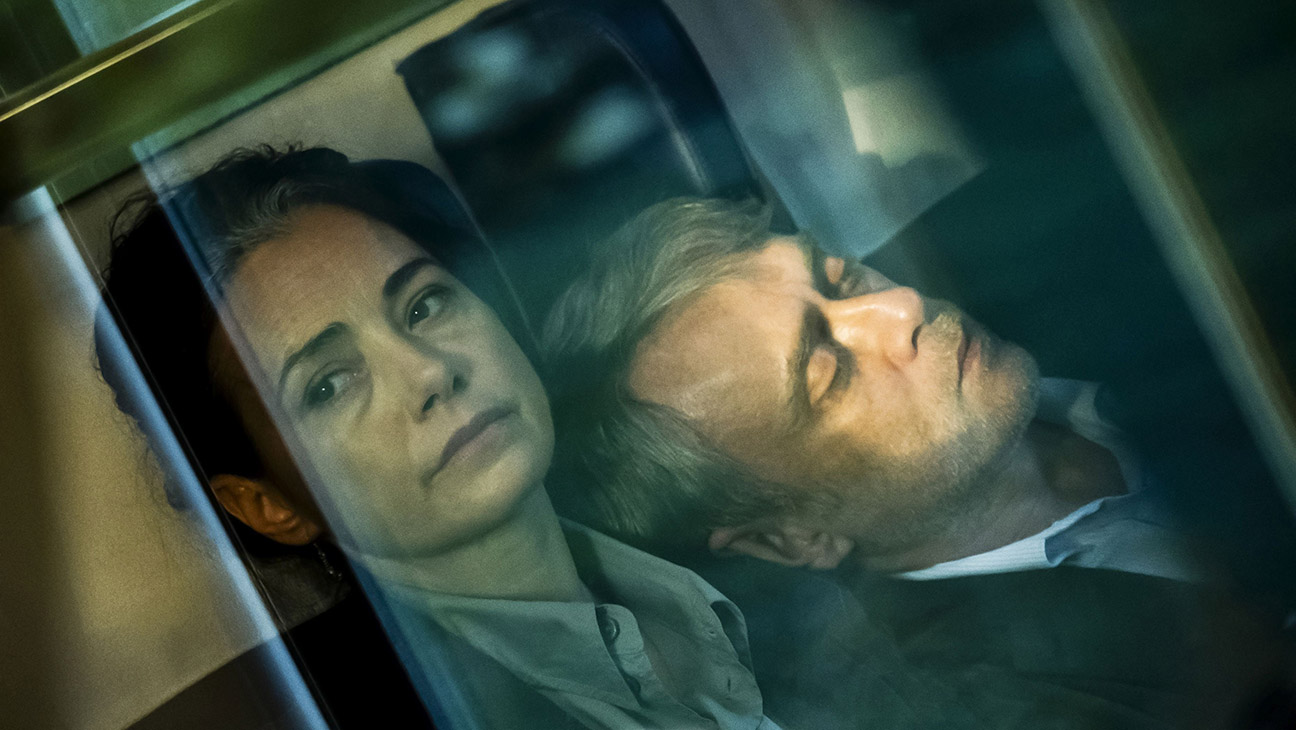
For his follow-up to the tense and claustrophobic German middle school drama, The Teachers’ Lounge, director Ilker Çatak has attempted something both more ambitious and more mystifying: a tale of authoritarian oppression, artistic strife and family conflict that’s set in contemporary Turkey but was shot entirely in Germany, with no attempts to hide the fact that nothing is taking place where it should.
Çatak may have done this for budgetary reasons — the film received funding from numerous German sources — as well as to maintain his creative freedom for a project that condemns Turkey’s current regime, even if it never gets too specific about who’s in charge. The director, born in Berlin to immigrant parents, may also be trying to depict the diaspora he’s a part of (Turks comprise roughly 5% of the German population), showing how it’s possible to make a full-fledged foreign movie in his family’s adopted homeland.
Yellow Letters
The Bottom Line
Intriguing if indistinct.
Venue: Berlin Film Festival (Competition)
Cast: Özgü Namal, Tansu Biçer, Leyla Smyrna Cabas, Ipek Bilgin
Director: Ilker Çatak
Screenwriters: Ilker Çatak, Ayda Meryem Çatak, Enis Köstepen
2 hours 7 minutes
Whatever the reasons, Çatak’s strangely subversive Yellow Letters (Gelbe Briefe) never quite packs the power of his Oscar-nominated 2023 feature, even if it’s carried by two strong lead performances and a convincing backdrop of persecution and gloom. By remaining purposely vague, whether about locations or the real-world stakes at hand, this modern-day political parable doesn’t hit you in the gut the way it’s meant to.
The opening scene, which hints at the allegorical nature of the story (written by Çatak, Ayda Meryem Çatak and Enis Köstepen), features respected theater actress Derya (Özgü Namal) on stage before a packed audience. “This is it. Our country. Our glorious land,” she exclaims while covered in blood and surrounded by cages. Among the spectators is a local official whom Derya snubs after the show ends, leading to a chain reaction that will get her booted from the theater company she’s been the star of for some time.
The play was penned by Derya’s husband, Aziz (Tansu Biçer), a writer and university professor who finds himself in a similar situation after urging his students to attend a protest against the government. Along with several other teachers, Aziz is put on administrative leave and forced to eventually defend himself in a kangaroo court, where a state attorney mounts evidence of Aziz’s supposedly seditious behavior.
Çatak’s intention with these mirroring plotlines is clear: He wants to show how a talented and loving couple will gradually be pushed apart by the unwarranted oppression they both suffer, obliging them to make concessions their marriage may not survive. In the case of Derya, this means accepting to star in a TV series backed by a pro-regime network; in the case of Aziz, who’s more politically committed, it means moonlighting as a taxi driver while writing a contentious new play on the side.
The stakes are obvious, but other elements of the film remain vague. Why is there never a single mention, either in conversation or during demonstrations, of Turkish leader Recep Tayyip Erdogan? Leaving him out is like ignoring the massive autocratic elephant in the room. Meanwhile, Aziz and his fellow dissidents are treated as “traitors and terrorists,” but we never quite grasp what they’re protesting about. And finally, even if title cards pop up explaining that “Berlin is Ankara” and “Hamburg is Istanbul,” it’s hard to not get distracted when we see shots of the U-Bahn, or of Berlin’s famous Television Tower, and are somehow supposed to believe that we’re in Turkey.
Seeing isn’t always believing — indeed, fellow German auteur Christian Petzold convincingly set his WWII refugee drama, Transit, in present-day Marseille — and perhaps Çatak is deliberately distorting reality to say something more universal about authoritarianism, which is on the rise in Turkey and lots of other countries, including Germany. There are times when Yellow Letters (the title refers to the paper color used by the government in its official correspondence) borders on the Kafkaesque, revealing well-meaning citizens crushed by irrational state power, trying to make amends within a system that has no regard for personal freedom.
Yet the film never gets surreal enough to become something like The Trial, nor real enough to feel like a direct reflection of current events. Çatak eschews political details to focus on Derya and Aziz’s strained marriage, which gets further tested after they’re forced to move in with the latter’s mother in Istanbul. Meanwhile, their teenage daughter, Ezgi (Leyla Smyrna Cabas), is having problems of her own, though the director tackles them in a predictable way that’s sometimes reminiscent of an afterschool special.
If the plot in Yellow Letters doesn’t exactly move the needle, intense turns from both leads keep the drama engaging. Namal, who’s a veteran of Turkish series and soaps, is especially memorable as a woman for whom self-preservation is more important than fighting authority. Derya’s survival instincts are way better than her husband’s, although Aziz ultimately finds his own way to buck the system while keeping his artistic integrity. In the semi-fantasy version of Turkey that Çatak has devised here, everyone has to make compromises with reality, including filmmakers themselves.
Source link