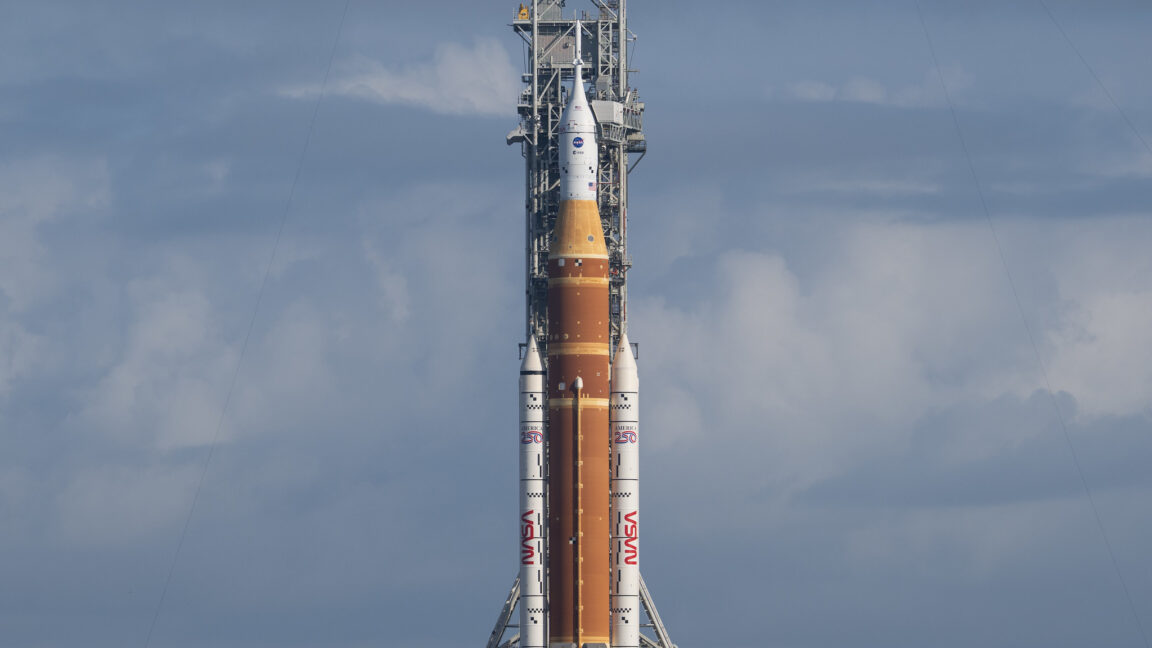
If things do not go so well, NASA’s chances for launching Artemis II this month will likely wither away. NASA only has a handful of launch opportunities each month where everything lines up for Artemis II’s flight around the Moon. The first two of this month’s launch dates, February 6 and 7, are no longer an option after NASA ordered the two-day delay in this week’s practice countdown. Here are the three launch opportunities still available this month, each with a two-hour launch window:
- February 8 at 11:20 pm EST
- February 10 at 12:06 am EST
- February 11 at 1:05 am EST
If NASA misses this month’s launch opportunities, the next chance to send Artemis II to the Moon will be March 6. NASA has released this chart showing all available Artemis II launch dates through the end of April.
“Wet dress is the driver to launch. We need to get through wet dress,” Blackwell-Thompson said. “We need to see what lessons that we learn as a result of that, and that will ultimately lay out the path toward launch.”
The fix is in
The Artemis II mission comes more than two years after NASA launched Artemis I, the first unpiloted test flight of the Space Launch System rocket.
It took four tries for NASA to fully load propellants onto the first SLS rocket during a series of Wet Dress Rehearsals (WDRs) in 2022. None of the practice runs were free of problems. The list of technical snags included difficulties supplying gaseous nitrogen to the launch pad, problems keeping liquid oxygen at the proper temperature, and a series of valve and seal failures that led to persistent leaks of hydrogen fuel.
Molecular hydrogen is notoriously difficult to wrangle. It is highly flammable, and the molecule’s fantastically low mass and tiny dimension make it hard to contain. The cryogenic temperature of the liquified form of hydrogen is an additional complication. Liquid hydrogen must be kept at temperatures around minus 423° Fahrenheit (minus 253° Celsius), cold enough to freeze solid any gas it comes in contact with except for helium.
When liquid hydrogen hits seals and gaskets, the materials can change their shape and size, creating leak paths that escape detection at ambient temperatures. That happened repeatedly during multiple countdowns preceding the Artemis I launch, unseating seals in the hydrogen fueling line between the SLS core stage and its ground launch platform.
Credit:
NASA/Joel Kowsky
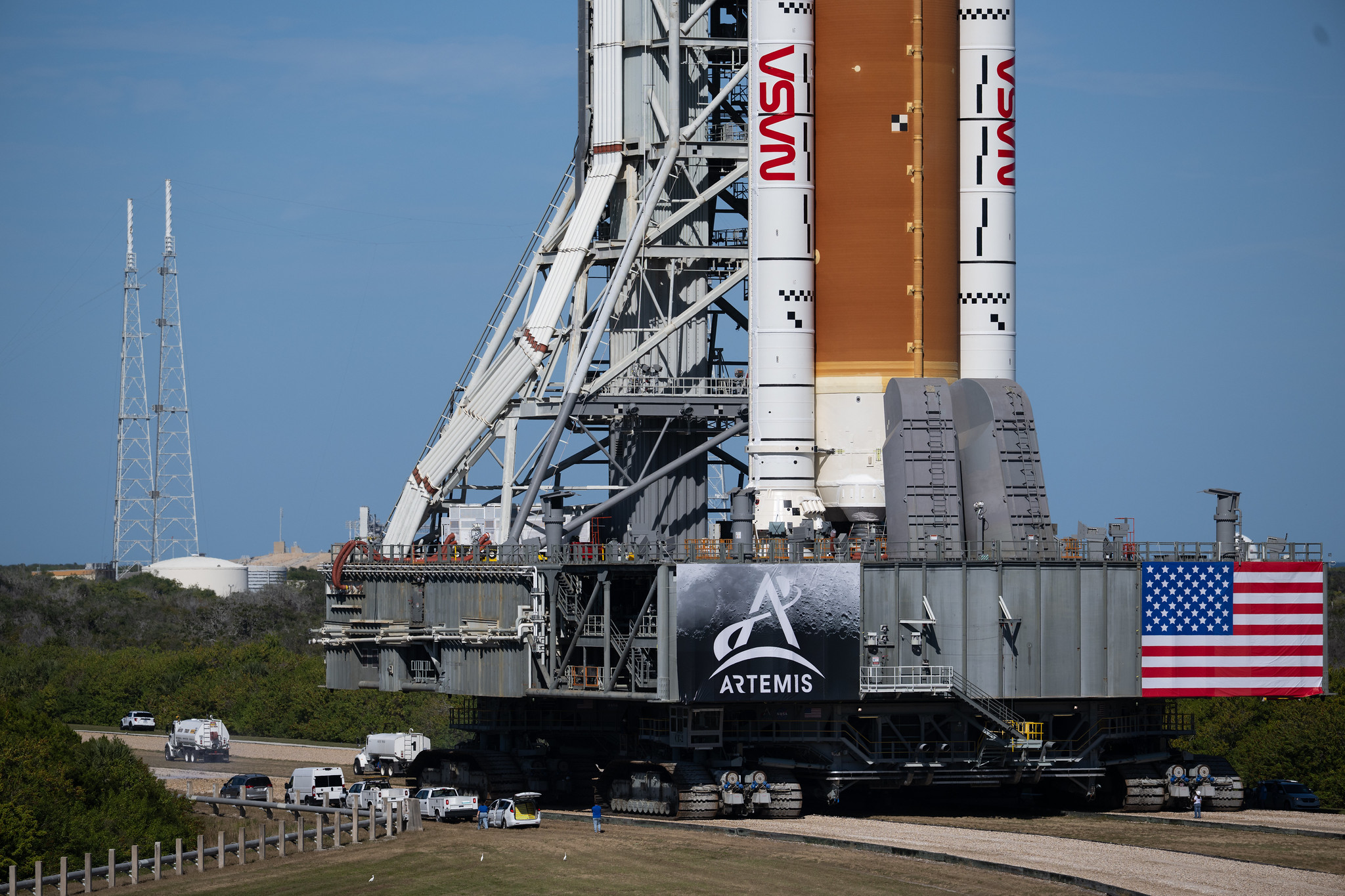
Two tail service masts, the gray structures sticking up near the base of the Space Launch System rocket, house the connections and seals where liquid hydrogen and liquid oxygen will flow into the core stage.
Credit:
NASA/Joel Kowsky
Finally, engineers devised what they called a “kinder, gentler” approach to ramping up pressures and hydrogen flow rates into the SLS rocket. The revised procedure wasn’t perfect, and it added some time to the fueling timeline, but it worked well enough to allow NASA to successfully launch the Artemis I mission in November 2022.
NASA will use the same fueling procedure for Artemis II. “We believe that issue has been put to bed,” Blackwell-Thompson said.
“Artemis I was a test flight, and we learned a lot during that campaign, getting to launch,” she said. “And the things that we’ve learned relative to how to go load this vehicle, how to load LOX (liquid oxygen), how to load hydrogen, have all been rolled in to the way in which we intend to go load the Artemis II vehicle.”
An all-day test
There are more changes to the launch countdown sequence for Artemis II because the astronauts will need to board the Orion spacecraft after the rocket is fully fueled. The crew will not be present Monday, but the rehearsal will include a built-in pause when the astronauts would climb into the spacecraft on launch day.
Source link