-

Alyssa Roenigk
Multiple Authors
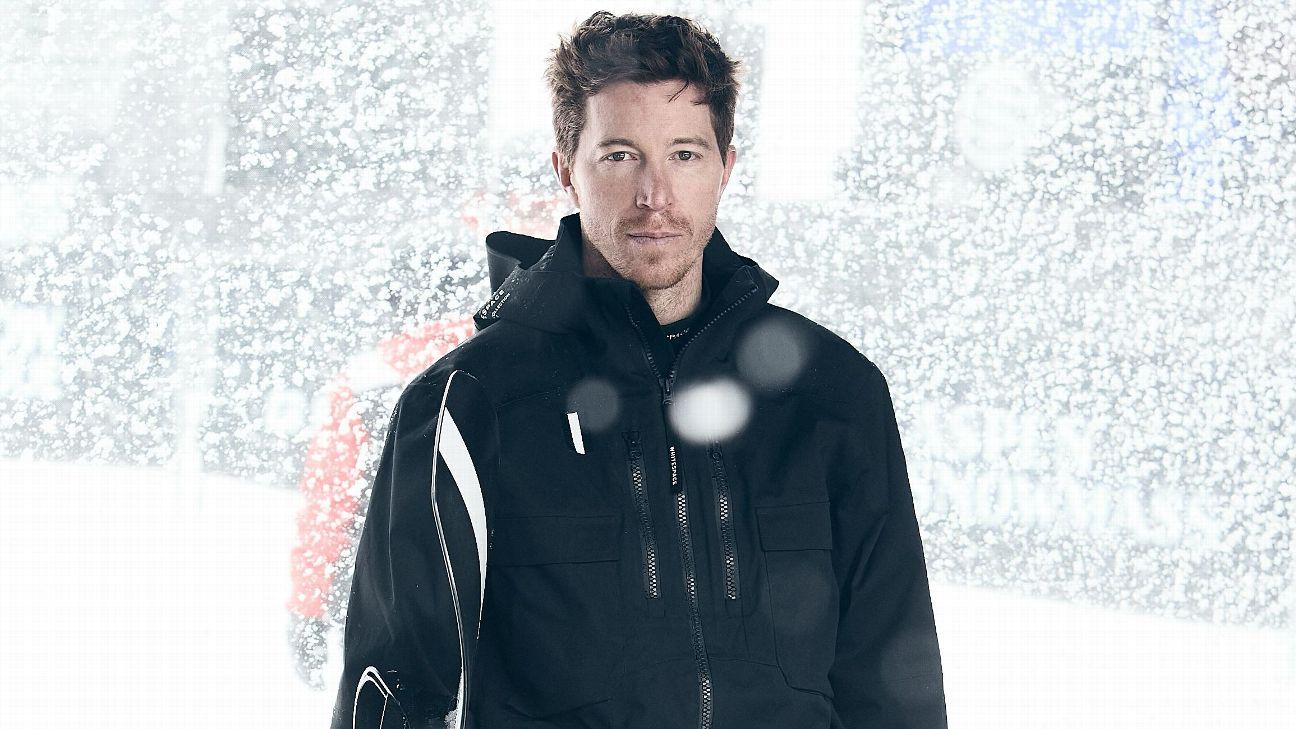
SHAUN WHITE HAS been here before. Standing in front of a floor-length mirror in a hotel room in Snowmass Village, Colorado, he studies his image. All-black snowboard gear. A competition bib with an American flag sewn onto the front. An unrelenting expression. It’s all so familiar.
This is the first time White, 39, has seen himself in a snowboard bib since he last competed, at the 2022 Beijing Winter Olympics, and something stirs. “I got all pumped up. I was like, that looks good,” he says. “That feels good. That old feeling, it calls me. It doesn’t go away.”
But White isn’t in Aspen to compete. In a few hours, he will take a ceremonial run through the Buttermilk Mountain halfpipe to open the March 2025 contest that has brought him to town. He’s nervous. Not about riding a halfpipe again, but about how he might feel while he’s riding. For three years, he’s worked to unravel who he is beyond Shaun White the competitor — without judges, medals and cheering sections defining him. He doesn’t want to squander that progress.
“When I focus on what I’m not doing, I miss competing,” White says. “But when I focus on what I am doing, I’m inspired. I still feel the glow of the career I had.”
White knows that if he put everything aside and returned to training, he could still be one of the best halfpipe snowboarders in the U.S. He sees other retired athletes making splashy comebacks and visualizes himself doing the same. “It’s been an internal war,” he says.
Over the years, White has stood eye to eye with versions of this reflection as he faced similar crossroads. There was the prodigy deciding whether to conform or change snowboarding; the teen star with late-night show charm grappling with becoming the mainstream face of a sport resisting mainstream appeal; the Olympic champion contending with risking another life-altering injury to win a third gold medal; the newly retired athlete wondering what to do next.
There were those close to White who thought that, after he retired, he would leave snowboarding entirely, maybe open a winery in France or travel the world to surf. White didn’t have a blueprint for the athlete afterlife, but he had spent decades cataloging the ways in which he would change the sport and unconsciously preparing for this next chapter — one that has ensured his influence on snowboarding will be felt throughout the upcoming Milan Cortina Winter Olympics and beyond.
“I had my moment,” White says. “I want to usher in a new era for snowboarding.”
He takes one last look in the mirror and imagines what it would feel like to drop into a halfpipe wearing a competition bib again, hear the roar of a crowd and feel a rush of adrenaline. “Standing at the top of the halfpipe wearing that bib,” White says, “it would have been too much for me.”
He peels off the bib, lays it on the bed and walks out into his future.
“THANK YOU FOR believing in me,” White says to a group of snowboarders and coaches gathered on the roof deck of a three-story temporary VIP lounge at the base of the Buttermilk halfpipe. “But know this isn’t about me. This isn’t about the resort owners or the broadcast partners. It’s about you.”
White leads a riders’ meeting at the inaugural stop of The Snow League, the contest series he founded to provide what he believes has been missing from the sport: better paydays, a more relatable television broadcast and a cohesive championship. White endured countless meetings like this during his nearly 30 years as a competitor, but he never believed he was part of the conversation. He wants the riders seated in front of him to feel like they can shape what this league becomes.
“Shaun is bringing in new sponsors and a lot of visibility and opportunities for us,” says 19-year-old Bea Kim, who was recently named to her first U.S. Olympic halfpipe team. “He wants to know what the athletes think, so the sport will go in the direction that we want it to go.”
Throughout the weekend, White is seemingly everywhere, channeling his relentless focus into even the smallest details. When he doesn’t like the look of the merch lying folded on a table in the VIP lounge, he finds someone to hang the sweatshirts and jackets. When he learns that American competitor Maddie Mastro’s mic has fallen off during a practice run, he sprints to the production truck and tells someone to find “really sticky tape” and get to the top of the halfpipe, stat.
He gives interviews, shoots social content, takes runs with guests, woos future partners and hosts nightly afterparties. He sits in the broadcast booth during qualifiers, announces the musical guests between heats and hands out trophies by luxury jeweler Tiffany & Co.
Looking around The Snow League, White’s ideas are everywhere, too, thoughtful touches he would have appreciated when he was competing: Pelotons in the athlete lounge so riders can warm up for competition, lockers with the riders’ names on them and on-demand shuttle service. Instead of the standard one-size-fits-all competition bibs, the athletes wear custom zip-front jerseys with their names and numbers on the front and back.
White has spent considerable time thinking about the TV broadcast as well, from camera angles to what sideline reporters wear. Riders are miked during their contest runs, and White encourages them to connect with viewers at home by expressing their feelings. “I said, ‘If you’re upset with the competition, or angry or happy, show that,'” White says. “People will see this means something to you and that something big is on the line.”
Rather than rely on translators, White and his team also hired a bilingual sideline reporter to interview the Japanese athletes who regularly dominate the podiums. “That was a lightbulb moment,” says Tom Yaps, a longtime agent who represents Mastro and freeski star Eileen Gu. “It was so thoughtful and respectful, and it will be copied.”
Then there’s the competition format, which White developed with his own career in mind. “[Each season] I created one run that was unbeatable, and I did it at every contest,” he says. But here, riders compete head-to-head in a bracket-style contest where they’re required to drop in from both the left- and right-side walls. That means they must learn new trick variations, prepare multiple runs and do their homework on their competitors.
“This setup creates a real challenge and builds drama and rivalries that fans will want to follow,” he says. “I want the sport to be seen as an accumulation of an entire season, not just one-off events.”
Even the top snowboarders and freeskiers rely heavily on sponsorships and bonuses to supplement their contest winnings. White hopes The Snow League will change that by awarding the largest prize purse in the sport: $50,000 to the winners at each stop, down to $2,500 to the eighth-place finisher, plus a $5,000 appearance fee and an additional payout to the overall champs.
Japan’s Sena Tomita, the 2022 X Games champ and Olympic halfpipe bronze medalist, missed a year of competition after Beijing because of health issues and took a significant hit to her earnings. The week after she won the inaugural event in Aspen — and the prize money — she sent The Snow League a letter.
“She’s like, ‘I take the Greyhound bus overnight to meet with my sponsors,'” says Miles Nathan, White’s longtime friend, business partner and co-founder of The Snow League. “‘I won the first event, and it changed my life.'”
THERE’S A STORY White likes to tell about himself at 15. He was in Sapporo, Japan, competing at the 2002 Toyota Big Air contest. The other snowboarders were all in their mid-to-late 20s and had spent the first couple of days in Japan partying and shopping. On contest day, they decided as a group that they would tell the organizers the jump was too sketchy and split the prize purse between them.
White was the lone holdout. He had been working his tail off and knew he finally had the trick to beat them. The event went on and White won. He was thousands of miles from home, surrounded by established riders whom he respected and wanted to like him. And they were pissed.
“That was a turning point for me,” White says. “I realized, I’m here to compete, and I want to win, and I’m done vying for your approval. In the end, I would rather be happy with myself and my decisions than get the approval of somebody I’m competing against.”
White realized that for the rest of his career, being liked would be at odds with being the best.
By his first Olympic win in Torino, Italy, at 19, White was a bona fide celebrity. He had wild red hair, a name made for headlines and the rare ability to connect with people who had never strapped into a snowboard. That translated into fame and fortune that far outpaced his peers. White was a household name making millions while many top riders struggled to pay their way to contests. Even before he settled a sexual harassment lawsuit in 2017 that changed how some people think of him, many in the sport didn’t believe White represented them. He was a snowboarder, but he wasn’t in snowboarding.
“Back then, there was a sense of it not mattering what the results were or what brand you represented,” says Burton owner Donna Carpenter. “We were all part of this unusually inclusive community because snowboarders had been excluded from so many places. We saw ourselves as being outside of the mainstream, and Shaun stuck out because he had his eye on the prize.”
There were those who believed White changed the sport too fast. He was the first snowboarder to hire a mainstream agent, appear on the cover of Rolling Stone and pioneer risky tricks many questioned were even possible within the constraints of 22-foot halfpipe walls. Although snowboarding has evolved, it has never fully embraced the level of fierce ambition that White unapologetically embodied.
“When I first started competing, it was weird. You’d get to the bottom of your run, and everybody said the same thing: ‘It’s nice weather. I’m having a good time. I’m just super stoked to be out here riding with my friends,'” White says. “As I grew into my own, I was honest. I was like, ‘I’m disappointed. I landed that run six times in practice and I just blew it in the competition.'”
White also wasn’t “just out here riding with my friends.” He respected his rivals, but he didn’t want to look around the top of a halfpipe and care too much about the people he wanted to beat. He didn’t understand athletes who counted their competitors among their closest friends, so he kept the contest blinders on long after the contests ended and kept his friend group tight.
These days, when White stands in front of the current generation of athletes, he realizes he cares about every rider at the top of the halfpipe. And while snowboarding still isn’t as cutthroat as other sports, it has progressed so much that the riders White is getting to know are a lot more like him than like the guys who wanted to ditch the competition and split the prize purse.
“I like to think the decisions I made in my career and how I conducted myself in interviews gives new competitors the road map to be competitive, to say, ‘I’m here to win,'” he says.
White believes The Snow League will provide those competitors with a platform to earn an unprecedented level of money, respect and recognition. “I achieved a level of fame and success in my career that I know wasn’t accessible to everyone,” White says. “Every rider in this league deserves that.”
WHITE IS BACK where he began, surrounded by energetic young snowboarders and dropping into a halfpipe on the Palmer Glacier at Oregon’s Mount Hood. He throws a few airs and then starts launching tricks, including his signature skyhook. A young rider lands a crippler 540, takes her board off at the bottom of the pipe and starts hiking back to the top. “Nice crippler. That looked good,” White says.
When White was a kid, he would travel here with his family from their home in Southern California and sleep in their white van in the hotel parking lot. He and his siblings were day campers at Windells. Their parents, Roger and Cathy, couldn’t afford the weeklong price tag, so he and his brother, Jesse, and sister, Kari, brushed their teeth in the public restrooms and ate packed lunches. Roger spent his mornings digging the halfpipe in exchange for time for his kids to ride it.
White knows that snow sports are even more expensive now than when he was a kid, so getting the next generation hooked — and finding the next halfpipe stars — requires serious investment. He has bought into these camps at Mount Hood, which provide coaching for skiers and snowboarders at all levels. He has also invested in the Snöbahn indoor training facilities in Denver, supports the freeride team at Bear Mountain in Southern California and sponsors up-and-coming riders as well as Olympic hopefuls through his snowboard brand, Whitespace. “He wants to pay it forward,” Carpenter says.
At this camp session in mid-July, sponsored by The Snow League, he has flown in Olympians Maddy Schaffrick and Nick Goepper, who give pointers to young campers and play in a series of intense dodgeball games. White hands out boards to more than 200 kids.
“I was like, ‘If you came to camp, even if you’re a skier, you’re getting a board,'” White says. “It was so fulfilling in so many ways because I remember being that age, going to camp. I’m like, ‘We’re locking in core memories for these kids.'”
Watch White as he hikes Hood’s new 22-foot pipe, paid for by his investment, and sessions the 18-footer with young riders and it’s clear this is his comfort zone. Sure, he also lives the jet set life of a millionaire retired athlete. But here, he vibrates at a higher frequency. He loves being the guy, having kids shout his name and ask for advice.
“To be around Shaun the last couple days and watch him snowboarding, it’s not the riding itself but the little idiosyncrasies between the riding, the speed at which he was hiking up the pipe and the tricks he was doing,” Goepper says. “As an athlete who’s still in the middle of it, I can tell when someone’s working and when someone’s living — and all I can say is, he must love it.”
THE CLOUDS SHIFT and the summer sun floods the corner of the porch where White sits. He’s wearing drawstring shorts and a white T-shirt, and it won’t be long before he’s also sporting a sunburn. “Wanna pop inside?” he says and opens the slider to the house he’s renting in Mount Hood with his family, Nathan, and Whitespace CEO Sonny McCracken.
White tries a couple of rooms, but there’s not a quiet spot in the house. “I guess we take those chairs,” White says and sits in the one farthest from the kitchen. It’s still well within earshot of everyone. “I just didn’t wanna talk s— about you all in front of you,” he says to the group.
“I already talked enough about you,” Nathan returns.
When White retired, he kept himself busy traveling the world with his fiancée, actress Nina Dobrev, and saying yes to every invitation. He knew that when he stopped moving, he would struggle to adjust to life without the built-in rhythms of a snowboard season and the drive to be the best. He had only known one life since he was 6, and so few people understood what that life was like.
But look around this house and it’s clear White has found a way to rebuild that life, down to the rhythms of the snowboard season and the singular focus on creating something great. Snowboard boots litter the room. Boards line the entrance. His family is here. Later this morning, he’ll take runs through the pipe with his dad and lap the chairlift with Kari and her kids.
He even drops into 22-foot halfpipes now and again. A few months from now, he’ll launch a front double cork 1080 at the bottom of a run during a television shoot in Colorado.
“I talked to Tom Brady, and he obviously knows the feeling of wanting to come back,” White says. “I kind of felt for him because I was like, ‘How can he get his fix?'”
But staying in snowboarding makes it tough not to look back over the fence and wonder, “what if?” White believes he can still hang with many of the men who pull on competition bibs. His fourth-place run from Beijing would more than likely have qualified him for his sixth Olympics. But he also knows there’s a problem with the pipeline if a nearly 40-year-old guy can compete with the best in the country — even if that guy is Shaun White. He hopes that if The Snow League succeeds, it will create a trickle-down effect that will rejuvenate snowboarding in the U.S., from convincing ski areas to invest in building halfpipes and terrain parks to more dryland training facilities and an influx of new sponsors.
That doesn’t mean he doesn’t obsess over thoughts of dropping everything and learning a backside triple cork, a trick that would place him in medal contention in Italy.
“Shaun’s always half in, half out,” says JJ Thomas, the 2002 Olympic halfpipe bronze medalist and White’s former coach who is now the team manager at Whitespace. “He calls me once a month and goes, ‘I think I’m doing it.’ And I have to say, ‘No, you’re not.’ There comes a time when your body can only take so much.”
It’s also no longer just about him. The people who work for White depend on him to be committed to his new life. So too are the athletes who placed their trust in him and The Snow League. White has spread himself too thin before: Ahead of the 2014 Games, he trained in both halfpipe and slopestyle while filming a documentary and touring with his band. He didn’t medal in either discipline. “The lesson from Sochi,” White says, “is do too much and it all falls apart.
“Put it this way: I could compete again,” he says. “I could drop everything and get after it. The run that won the last Olympics, I know I could do that run.” He walks through the mental gymnastics that would require: convincing Thomas, flying to a halfpipe camp in New Zealand, hiring a trainer, competing throughout December and January.
But that’s when he’s supposed to be focused on The Snow League’s second stop in Beijing and spending the holidays with his fiancée and family. He has potential new contest venues to tour, a Whitespace catalog to shoot and a wedding to plan. He wants kids someday. He knows it’s time to move on.
“If I go down this path, eventually I’m right back where I was before,” White says. “Now it’s time to lean into my family life and relationships.”
A few months before his second Olympic win in Vancouver in 2010, White was asked about his legacy. He described a graffiti painting of Doors frontman Jim Morrison. “His face represents wild times and experimentation and a deeper, darker side of music,” White said. “I’ve always thought that if my face were on a wall someday, I’d want people to get the same vibe.”
Fifteen years later, White considers that answer. “It’s hard to say what I want people to think of me, because it’s me. You know what I mean?” he says. “Like, I was just doing the dishes last night. I don’t think too far ahead. But I think my answer is still the same.
“If we clear this next level we’re trying to get to, [my legacy] will be cemented in a different way than just, ‘Oh, he was a great competitor in this moment in time.’ That’s probably just the human condition, always thinking that there’s got to be more. That keeps the knee-jerk thought of wanting to compete again in check. It’s time for me to move on to something new. Why chase something that’s already happened?”
WHITE STANDS AT the bottom of the Beijing halfpipe, a Whitespace board under his arm, just like he did nearly four years earlier at his final Olympics. If there’s any place he wishes he could compete again, it would be here, where he fell on the final contest run of his illustrious career. It’s the one do-over he has said he would want in life.
But now he’s smiling like he’s won a contest. The second stop of The Snow League just ended and its debut of freeski halfpipe was by all accounts a success. Being back here has been surreal and nostalgic, but it wasn’t as painful as he expected.
“It was such a win to be back there and be just as relevant in the sport but doing something that’s more than a performance,” he says.
The Snow League has two more stops this season. After that, White and his team plan to expand the number of events and increase the prize purse as early as next year while workshopping how to add slopestyle. While White hopes The Snow League will unify the sport, his series will face additional competition in 2027, when the X Games plan to launch a league of their own.
“We’ve been talking about an independent league for 20 years,” says Ryan Runke, an agent who represents Olympic snowboarders and skiers. “If Shaun’s the first to crack the code and make competitive snowboarding relevant to the general public, that’s a legacy.”
In Milan Cortina, White will be in the hosting booth during men’s and women’s snowboard halfpipe finals. He’ll also be a correspondent for “The Today Show” and co-host the opening ceremony on Feb. 6. These Olympics are the first in 20 years where he’s not competing. He’s nervous. Not about commentating. But about how he might feel working from the sidelines.
“It’ll be bittersweet,” White says. “I told NBC, keep me busy. Drown me in interviews. I don’t want to sleep.”
White doesn’t understand those who thought he would walk away from the sport he has dedicated his life to, from the only life he has ever known.
“I think Shaun has been largely misunderstood by people in our industry, and I include myself in that,” says Kevin English, CEO of White’s Unrivaled Action Sports and the longtime president of We Are Camp, which owns Windells and High Cascade ski and snowboard camps. “Now he’s showing the person behind the mask, and it’s genuine.”
Back in 2022, White posted a black-and-white photo from the bottom of the Beijing halfpipe, with the caption: “Thank you, snowboarding.” Now, he reposts that image with a second photo recreating it. In this shot, he’s standing in the halfpipe holding a snowboard and wearing a Snow League bib — except this one simply says, “Staff.”
ON NEW YEAR’S EVE, White sat down at a piano for the first time in a long while and played Adele’s “Someone Like You,” the only song he knows on keys. While his friends sang along, he felt something stir, remembering his old love of performing music.
Two weeks later, he found himself giving a fake name to a guy at a warehouse near the Van Nuys Airport and pulling the cover off a 1960s midcentury Baldwin piano. It was delivered to his home in Los Angeles a few days later.
Typically, White wouldn’t have acted so impulsively. He would have overthought each step of the process, from looking for the perfect instrument to deciding on the precise corner of his home to tuck it out of the way. “My New Year’s thing was to act in the moment,” White says.
This year, White is challenging himself to reconnect with old passions, take big swings and think about what is most meaningful in the long run. Leaning into his family life and relationships looks different now.
“There have been big changes in my life for sure,” he says. “I was heading in one direction and now I find myself somewhere else.”
In September, White and Dobrev called off their engagement and separated after five years. “It really puts life and relationships into perspective when you’re at a crossroads and you come to a decision with somebody,” he says. “The mindset hasn’t changed. I still want love in my life. I still want a family.”
White turns 40 this year. He’s spending time with his family and old friends and pouring himself into his businesses. He’s traveling with his guitar again. He’s looking forward to this Olympics, the culmination of his three decades in snowboarding, and the final two events of the inaugural Snow League season.
“I’m headed into the big four-oh,” White says. “What’s this next 10 years going to look like? What kind of guy am I going to be?”