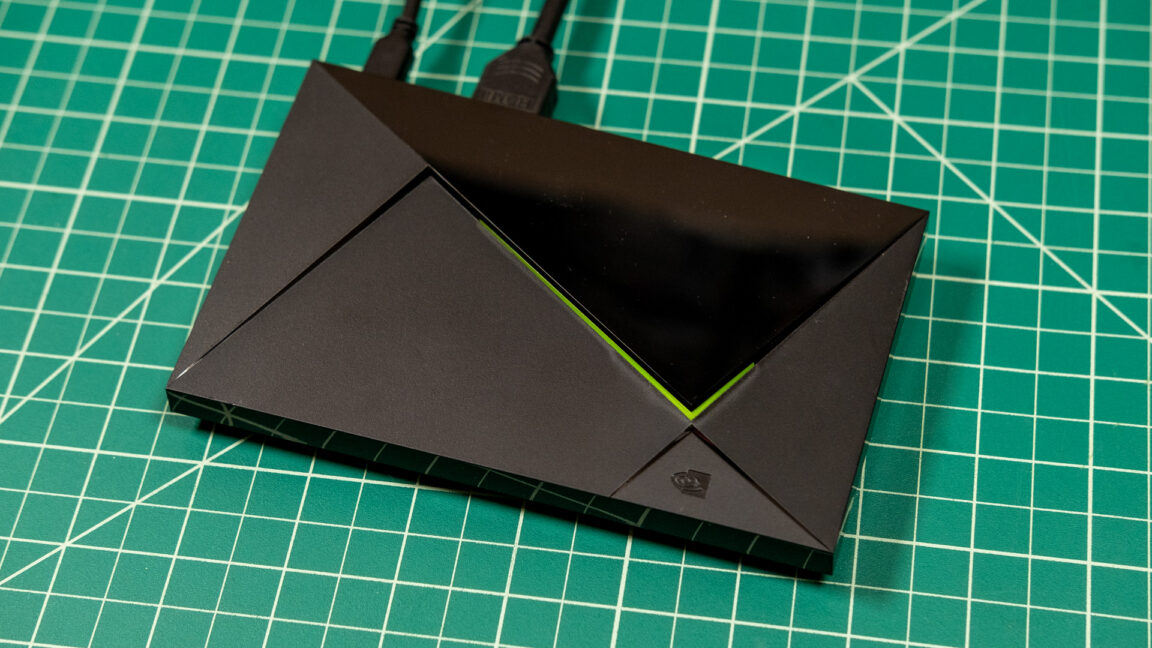
The best example of Nvidia’s passion for support is, believe it or not, a two-year gap in updates.
Across the dozens of Shield TV updates, there have been a few times when fans feared Nvidia was done with the box. Most notably, there were no public updates for the Shield TV in 2023 or 2024, but over-the-air updates resumed in 2025.
“On the outside, it looked like we went quiet, but it’s actually one of our bigger development efforts,” explained Bell.
The origins of that effort, surprisingly, stretch back years to the launch of the Nintendo Switch. The Shield runs Nvidia’s custom Tegra X1 Arm chip, the same processor Nintendo chose to power the original Switch in 2017. Soon after release, modders discovered a chip flaw that could bypass Nintendo’s security measures, enabling homebrew (and piracy). An updated Tegra X1 chip (also used in the 2019 Shield refresh) fixed that for Nintendo, but Nvidia’s 2015 and 2017 Shield boxes ran the same exploitable version.
Initially, Nvidia was able to roll out periodic patches to protect against the vulnerability, but by 2023, the Shield needed something more. Around that time, owners of 2015 and 2017 Shield boxes had noticed that DRM-protected 4K content often failed to play—that was thanks to the same bug that affected the Switch years earlier.
With a newer, non-vulnerable product on the market, many companies might have just accepted that the older product would lose functionality, but Nvidia’s passion for Shield remained. Bell consulted Huang, whom he calls Shield customer No. 1, about the meaning of his “as long as we shall live” pledge, and the team was approved to spend whatever time was need to fix the vulnerability on the first two generations of Shield TV.
According to Bell, it took about 18 months to get there, requiring the creation of an entirely new security stack. He explains that Android updates aren’t actually that much work compared to DRM security, and some of its partners weren’t that keen on re-certifying older products. The Shield team fought for it because they felt, as they had throughout the product’s run, that they’d made a promise to customers who expected the box to have certain features.
Source link