In May 1969, Fred McFeeley Rogers, host of the nationally syndicated series Mr. Rogers’ Neighborhood, appeared in front of the U.S. Senate on behalf of PBS and the Corporation for Public Broadcasting. In a six-minute speech, he impressed upon the Subcommittee on Telecommunications and Media the necessity for children’s content that captured “the inner drama of childhood,” by speaking “to it constructively.”
By the end of his speech, Rogers had secured the support of Chairman John Pastore and $20 million in funding, which the Nixon administration had sought to cut in half.
If only such tactics could work now. After decades of fending off defunding attempts, the CPB saw its board formally vote to dissolve last month after Congress’ rescission of all federal funding last year.
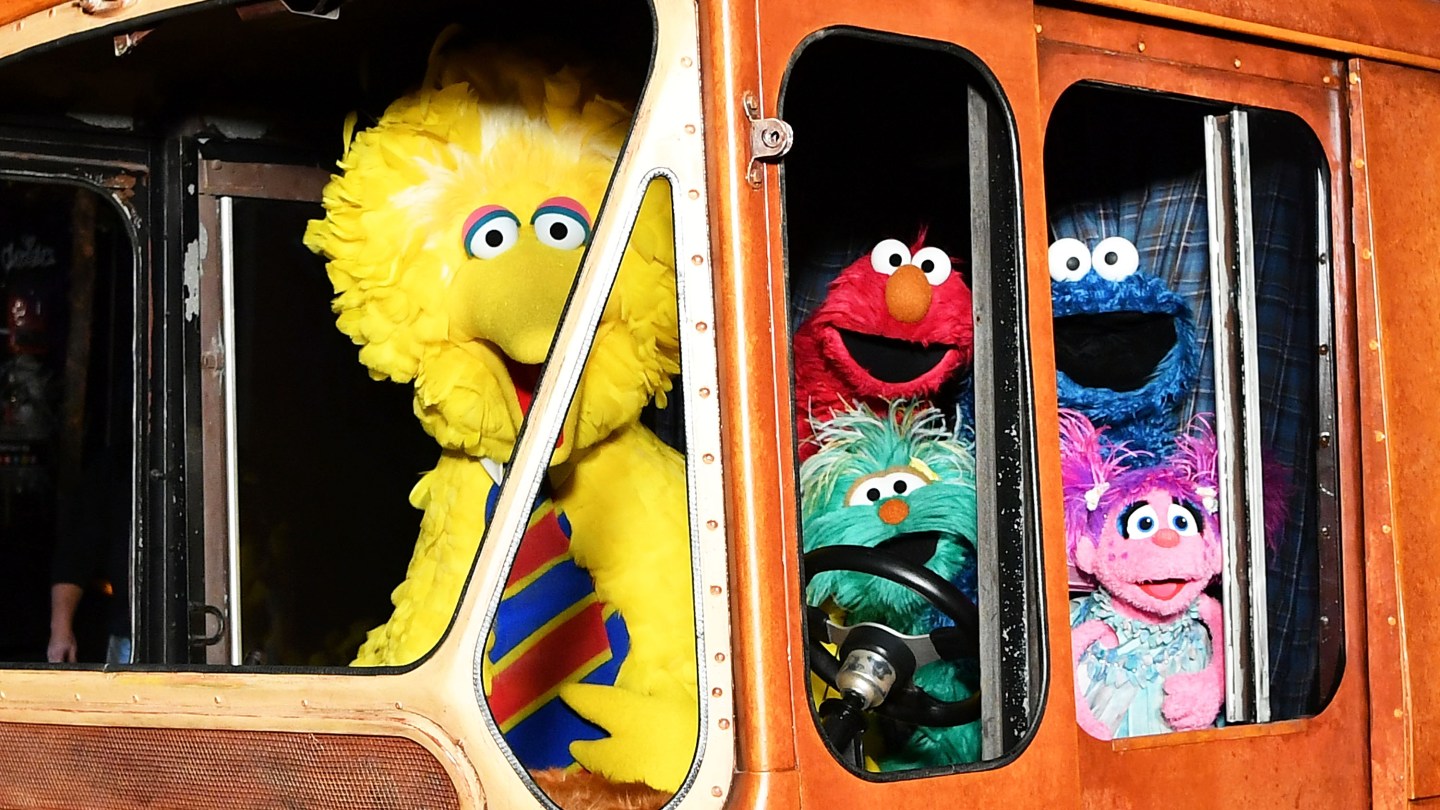
But its beneficiary PBS Kids remains. Public TV’s educational media brand for children 2-8 has long carried Mr. Rogers spiritual successors Daniel Tiger’s Neighborhood and Donkey, alongside
Sesame Street, Reading Rainbow and Arthur, into 95% of U.S. households. The brand continues to maintain its commitment to viewer access, with new ASL episodes and industry-leading research on child development, literacy and even AI.
“The bulk of funding and public media budgets really comes from viewers like you,” says PBS Kids’ Senior Vice President and General Manager Sara DeWitt. “So at this moment, we are still able to distribute PBS Kids, and we are offering these stations a full lineup of programming over the air and through live linear feeds, the 24/7 channel that we offer, and the streaming services that are all co-branded to that station. We are still here.” That presence stretches to two new shows premiering this winter, the recently debuted reading-centric animated show Phoebe & Jay, about a pair of young siblings and their apartment-building neighbors, and the March premiere of Madge’s World.
That’s despite the termination of the $112 million “Ready to Learn” grant, which funded programmers’ creation of curriculum-based educational content to address the school-readiness gap for elementary and preschool-aged kids. Those cuts that have resulted in a 30% reduction in personnel and more than 80 gaming titles already removed from the PBS Kids website and mobile app.
DeWitt spoke with THR about how the kids’ programming leader — whose Ready to Learn-funded shows reached 36 million TV viewers and earned 1.8 billion video streams during the 2023-2024 season alone — is working to make “sure that we are staying true to our mission, even with fewer dollars.”
How and what has the Ready to Learn Grant termination impacted since last year?
It really hit us hard in the educational outreach and research spaces. All of that work was funded by the federal government, and a lot of it was funded through that grant. We also had to look at where we felt like PBS and our mission are, and what most differentiates us in this market. What we see in all of the outpouring of emails and social media messages we’re getting is that we are educational and our shows are putting kids at the center. So how do we make sure we maintain that, even if we can’t do as much of it? We did have to cut staff across the whole department, but it was thinking about, if we’re doing less of this, how do we make sure we still have everybody we need to reach kids where they’re at. We’re the number one trusted brand among parents, so we couldn’t cut any corners on anything that’s going to take away from that.
PBS Kids has long been defined by its educational commitment to diverse young viewers. For people unfamiliar, how have you historically used that grant funding to create content reflective of that?
The mission is to be relevant to all of America’s children. We want kids to see themselves, and also to see the lives of other kids and understand what those experiences are like. We are creator-driven, so we sometimes issue an RFP [request for proposal] around a curriculum area if we feel like there’s a gap, if there’s something that we know kids particularly need, but we don’t go out and say, “We’re looking for a show that’s exactly like this.” We want a creator to come to us with characters and stories that are authentic to their experiences and tell stories that will be reflective of the lives of kids in the U.S. Ready to Learn funded Molly of Denali, and while some people said, “Oh, that’s so narrow,” because it’s about a kid in Alaska, I heard from general managers of stations in the middle of the country saying Molly‘s really resonating here because it’s the only show that depicts rural life really authentically.
How is your pipeline for 2026 or even 2027 affected?
We have a long development process at PBS because we work with academic advisors, and do a lot of research and testing with kids. So we will be seeing gaps as we look further into the future. That Ready to Learn grant we’ve had since 1995 often could fund two to three series, and right now, we’re going to be looking at half of that. Phoebe & Jay is our last show funded by Ready to Learn. When that grant was terminated, we were able to finish out this series with huge thanks to several foundations who helped us close some of that funding gap, and because we were far enough along in production, we could launch it. [But] we have things in development that we’ve had to put on pause, and we have things in development that we now are trying to fundraise against and see if there are ways we can do some testing to make sure we’re on the right track and can move forward. The question is where and how the gap is going to hit, depending on the development timeline and the new things that are launching. We are also probably going to think about rolling things out over a longer period of time, so not as many new episodes as quickly. But we’ve got to make sure that works for kids. Sometimes that depends on the show or on the age range that we’re targeting.
There were reports in December that an Arkansas station was replacing PBS with locally created content following the funding loss. How are your local affiliates being affected and responding?
I have an advisory committee of stations that I meet with quarterly, and we grapple with various things. You’ve got somebody from Arizona there, somebody from Kentucky, somebody from Alaska — people across the country saying, “Here’s how this would work in my area. I wouldn’t do this. I would do this.” They’re giving us feedback and are weighing in. They are also the ones who take it out into communities, which the Ready to Learn grant funded. In some cases, it was partnering with the libraries or taking things into aftercare programs. In other cases, it’s taking it to the housing authority. Some stations have big partnerships with the Boys and Girls Clubs. Our member station in South Carolina did some amazing things through teacher networks, making sure that we’re reaching the kids who could most benefit from a show like Lyla in the Loop, where they can see role models in STEM and get some of those early computer programming skills. It is such an asset, and in many cases, this is the last locally owned and operated station in a lot of communities. What we’re seeing right now with the loss of the federal funding and Ready to Learn is a question of how many of the stations are going to be able to continue to do that deep work.
That Arkansas station also announced it would begin creating its own kids’ programming. In your opinion, what can the kids’ space potentially lose in terms of quality control when communities stop getting your content and approach?
When I started in this industry, if you wanted to create a show or if you wanted to create a game, you had so many gatekeepers you had to go through, and once you created it, you were on platforms that had a ton of guardrails built in. You had to meet certain standards of not being too commercial. You had to watch how things were being sold within it. As soon as COPPA [Children’s Online Privacy Protection Act] came out, there were all these regulations around what you could and couldn’t collect, what you could and couldn’t do in this space. Today, content can be created by anybody and uploaded on a platform that has almost no regulations for children and is being self-tagged by the people who upload it. They can say it’s educational, even if it’s not. This is where I feel like we need PBS Kids even more than ever. When we launched Weather Hunters [in September], and it had really great numbers out of the gate, it showed that there is a desire for that content. Parents want something that isn’t being driven by an algorithm, that isn’t being driven solely to generate more revenue.
PBS Kids has been doing work around programming and AI research. How are you navigating the use of AI, and how can your funding losses in this space affect an industry with virtually no shared standards for children?
What we are thinking about is all of that co-viewing research that has been around for decades, and started with shows like Sesame Street. University of California Irvine and Harvard University have a National Science Foundation grant working with us to develop conversations with characters while you’re watching. It started with Elinor Wonders Why, which is a science show. The episode pauses, Elinor breaks the fourth wall and asks the kids a question about what’s happening, and then creates some conversation. “What’s your hypothesis? How would you make that sauce come out of the bottle faster?” All of that was not generative. The AI is about parsing the kids’ language and finding the right answer that was then written by the scriptwriters. There’s [also] a follow-on with Lyla in the Loop on computational thinking for slightly older kids in the field right now. This type of AI usage can really help us better think about the educational possibilities of media. We’ve also been using machine learning in our learning analytics platform for a very long time, the big takeaways being about how a child signals they understand a concept in a game. Another thing is also making sure in our storytelling that we’re thinking about the world in which kids are living. We have several shows about how this explosion of AI is relevant to kids’ lives. In Work It Out Wombats! there’s a little chatbot that the kids are playing with, and they begin to wonder what the limitations of this are versus their friends.
PBS Kids has led in content accessibility for decades. Can you talk to me about how accessibility lives in the brand and what is facing cuts?
It is in our DNA, and it’s part of what having a non-commercial lens on things allows us to focus on. Public media pioneered closed captioning, and it takes a non-commercial entity to recognize how critically important a service like that would be. We’ve also been thinking about children on the autism spectrum who may have sensory accommodations and built a gaming overlay that allows kids to change depending on how they best learn. The tools that we’ve created are deployed, and we’re maintaining those tools. The thing that is most at risk right now is continued research and development. What is the next thing we want to try to research? The other piece of accessibility for us is about kids who have broadband. Almost every house has access to streaming, but in some cases, that signal isn’t very strong, or there’s only one device in the house. We are thinking about those third and fourth-generation devices, the ones kids are most likely to be using. The ability to download content when you have strong Wi-Fi and play even when you don’t have it is one of the first things that we’re having to cut because it takes so many resources to keep that operational. We’re starting to look at all of the different pieces and what else we can do.
What are all the funding options you’re considering?
Right now, we have to think about everything. One of the things terminated was the expansion of our American Sign Language interpreted episodes, and a major donor helped us finish that work so we can launch that library of ASL episodes. But we’re going to have to think bigger than that and in different ways because I’m not sure that philanthropy can fill this hole by itself. We have fewer staff, so we’re already having to do it that way, but we’re also thinking about other kinds of partnerships for distribution. This is an area I think about in the game space. When it comes to a library of math games that could be supplemental to help support knowledge in an after-school program, that might be a commercial opportunity. We’re also thinking about storytelling, and that’s where we need to fundraise, particularly for our slowing production pipeline. There are so many things kids can learn from, even if they were created 10 years ago, but we have to be creating new content to really meet their needs today. We’re a trusted space. We’re used in schools. We have a robust library of educational content that has almost all been funded by the federal government. But this might be the point where we look at commercial partners, ad tech companies. We really are trying to think about things in ways that we never have before.
Source link